There is a moment in episode #283 of the Shawn Ryan Show that is difficult to forget. A former CIA Chief of Station — decorated, elite, described by peers inside the intelligence community as “the pinnacle of what the US develops and deploys globally” — is sitting across from the host explaining what happened to him in the fall of 2021 in Southeast Asia.
He woke at 4:55 AM to what felt like a crushing weight on his chest, a sound that was not a sound, and every muscle in his body locking up simultaneously.
Within hours, he could not read a license plate 15 meters away. Within days, he could not walk through a hallway without losing his sense of direction. He sat on a 14-hour flight home staring at a blank screen — not sleeping, not moving, his wife later describing the experience as deeply unsettling.
Months later, after blood biomarkers confirmed brain injury had occurred, one of his official diagnoses landed: dysautonomia — specifically POTS, postural orthostatic tachycardia syndrome, a disorder of the autonomic nervous system.
His story is extreme. But the biology behind it is not.
And that is exactly why it matters to anyone living with dysautonomia today.
What Dysautonomia Actually Is — And Why It Gets Missed
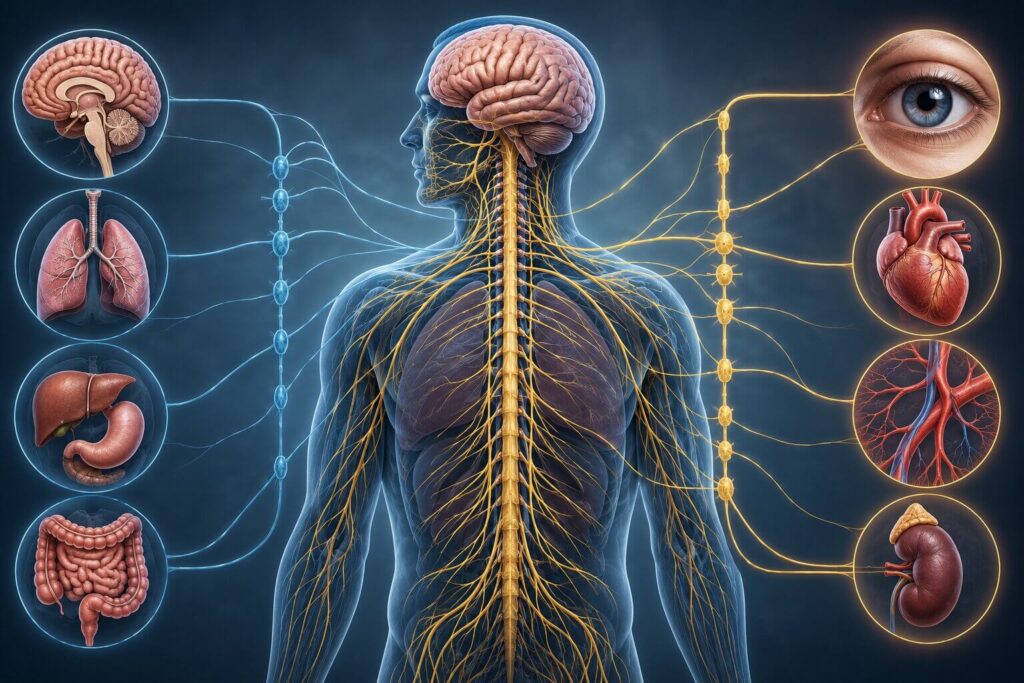
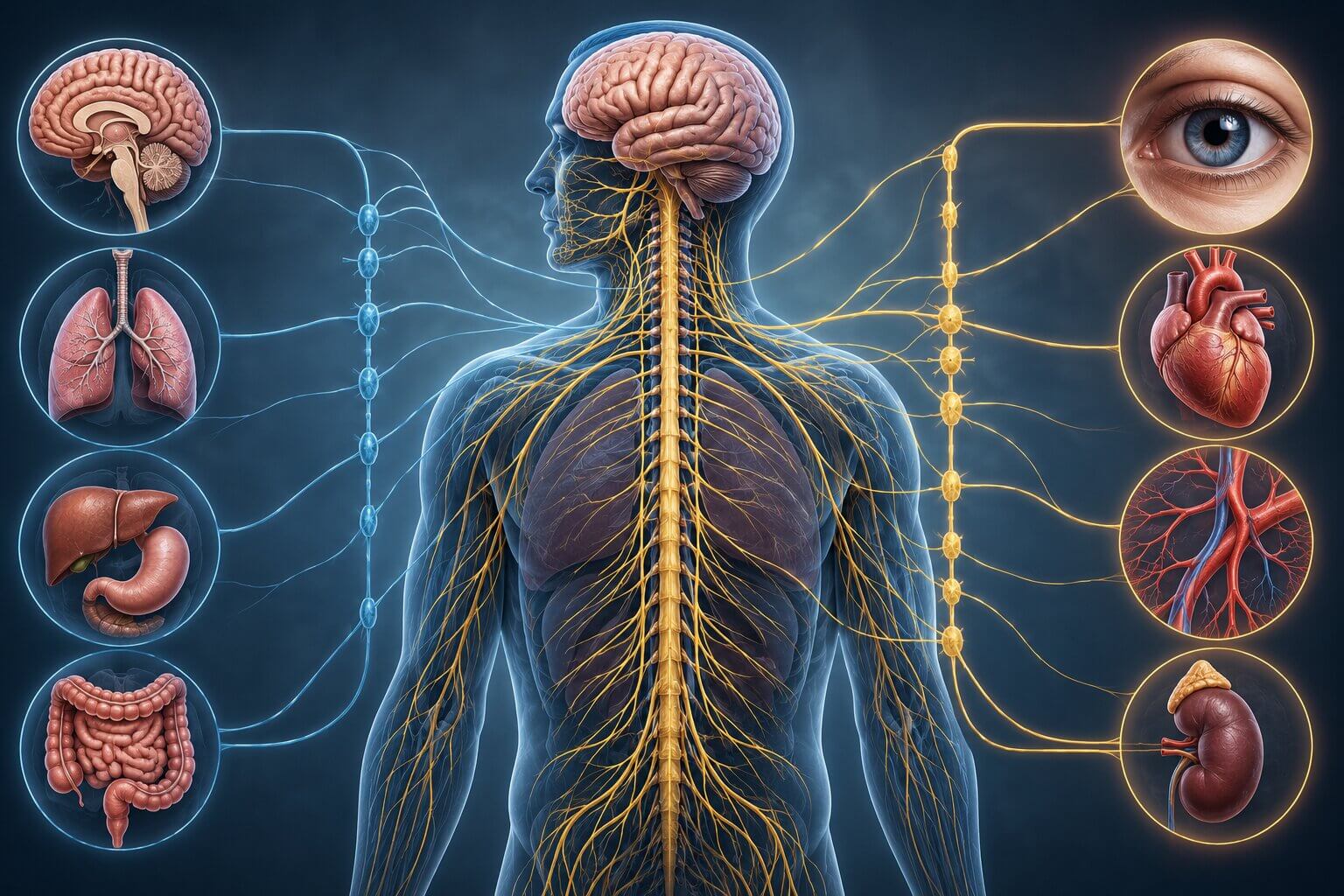
The autonomic nervous system operates beneath conscious awareness.
It governs heart rate, blood pressure, temperature regulation, digestion, pupil response, and the dozens of involuntary processes that keep the body in balance.
It is, in the most literal sense, the body’s background operating system.
Dysautonomia is what happens when that system breaks down. It is not one single disease but an umbrella term for any condition involving dysfunction of autonomic regulation.
In POTS — the variant AJ was diagnosed with — the cardiovascular system fails to respond correctly to positional changes.
When the patient stands, blood pools in the lower body because the blood vessels don’t constrict properly.
The heart compensates by beating faster, sometimes 30 to 50 beats per minute above baseline, while blood pressure fluctuates unpredictably.
The brain receives less blood than it needs, and the result is exactly what AJ describes: brain fog, exhaustion, cognitive impairment, and the sensation that the world is moving too fast to process.
What makes dysautonomia so hard to diagnose is that it is invisible on standard imaging.
MRIs look normal. Routine bloodwork rarely flags anything. The symptom profile — fatigue, brain fog, heart palpitations, emotional flatness, temperature sensitivity, difficulty concentrating — is so broad that patients are frequently told it is anxiety, depression, or stress.
Many spend years cycling through specialists before anyone connects the dots. Some never do.
The Attack Was Designed to Target the Autonomic Nervous System
Here is the detail that transforms AJ’s case from a compelling story into a medically significant one.
In 2003, a Russian scientist presented research at the European Symposium on Non-Lethal Weapons outlining how pulsed microwave energy could be directed at the human body to specifically disrupt autonomic nervous system function.
This was not classified material. It was published research, available in open academic archives.
AJ was attacked in 2021. He was subsequently diagnosed with autonomic nervous system dysfunction — dysautonomia.
The question posed during the Shawn Ryan Show interview is one no one in the intelligence community has been willing to answer publicly: when the adversary published their intended biological effect two decades before the attacks, and the survivors are diagnosed with precisely that biological effect, at what point does the word “anomalous” become indefensible?
For the purposes of this article, the significance is not political — it is clinical.
If a directed energy pulse can deliberately induce dysautonomia by disrupting autonomic signaling at the cellular level, then we are not dealing with a mysterious syndrome.
We are dealing with a targeted biological disruption of a specific system. And targeted disruptions have specific mechanisms. Specific mechanisms can be addressed.
Why Conventional Medicine Keeps Treating the Wrong Thing
AJ’s journey through the medical system is one that will resonate deeply with anyone who has spent years living with dysautonomia while collecting prescriptions that do little.
He was evaluated at multiple facilities.
He was diagnosed with POTS, cerebellar dysfunction, binocular vision disorder, and auditory processing damage.
He was told his MRIs were “relatively normal.” He was offered SSRIs and medications to manage individual symptoms.
The facilities treating him were, in some cases, receiving guidance on what to document and what not to document — a detail that speaks to institutional failure, but also to a broader problem in how dysautonomia is managed: the system is built to treat what it can measure, not to repair what is actually broken.
AJ articulated the problem with remarkable clarity for someone describing it from inside a neurological injury: “Let’s try and fix the system, not the symptoms. Let’s try and energize these cells. Let’s try and get the mitochondria back up fired.”
That sentence is not just personal philosophy. It is the operating principle of regenerative medicine.
The Cell Damage Response: The Biology Conventional Medicine Is Missing
When the body experiences significant trauma — neurological, electromagnetic, or otherwise — cells do not simply get injured and then recover.
Many of them enter a protective shutdown state known as the cell damage response. The cell essentially powers down, stops communicating, stops executing its functions, and signals neighboring cells to do the same. The shutdown spreads.
The result is a network of cells that are, in AJ’s words, “neither living nor dead” — not destroyed, but not functioning.
Not responding to medication designed for healthy tissue. Not recovering on their own because they have lost the biological signal to do so.
This is precisely what drives the most persistent dysautonomia symptoms.
The autonomic nervous system’s regulatory cells are not gone. They are dormant. And you cannot medicate a dormant cell back to life. You have to give it the conditions and the signals to reactivate.
That is the gap regenerative medicine exists to fill.
The Regenerative Protocols That Address Dysautonomia at the Source
When conventional medicine stopped offering AJ anything beyond symptom management, he made a decision that is worth paying close attention to: he stopped asking the system for help and started building his own recovery protocol from the ground up.
Not with willpower alone — with science. Specifically, the kind of science that asks what cells need to come back online, not what pills can make the symptoms quieter.
He tried stem cell therapy. After the first session, something shifted. Faces looked different to him — recognizable in a way they had not been since the attack.
The emotional processing that had gone completely offline came back, partially, for the first time. He described it as extraordinary.
He also worked with bioelectrical and frequency-based therapies — devices that deliver specific energy frequencies to the nervous system to stimulate dormant cells back toward function. After each session, his visual clarity improved and his ability to process his environment sharpened, temporarily but meaningfully.
He also said, directly and without hesitation, that HBOT was the next protocol he wanted to pursue — that he felt his recovery had reached the point where it was the right intervention to try.
What he was describing, across all of it, was a single coherent idea: give the cells what they need to stop being in shutdown mode. That is exactly the framework behind the protocols available at XtendCenter.
Stem cells and exosomes work by introducing biological signaling molecules that help reactivate cellular repair processes and reduce neuroinflammation.
In dysautonomia, where the breakdown happens at the communication level between the brain and the autonomic nervous system, the goal is not to replace tissue — it is to restore the signaling pathways that have gone silent.
AJ’s own experience after stem cell therapy is one of the clearest firsthand accounts of what that restoration can look like.
Hyperbaric Oxygen Therapy (HBOT) saturates the plasma with concentrated oxygen, directly supporting mitochondrial function and reducing the neuroinflammatory environment that keeps dysautonomia symptoms locked in place.
The research on HBOT for autonomic and neurological recovery has grown significantly in recent years.
AJ said he hadn’t tried it yet but was eager to — and for anyone following his recovery logic, XtendCenter is exactly where that next step becomes available.
The HOCCATT protocol combines ozone therapy, whole-body hyperthermia, and photon energy in a single session.
It addresses the systemic toxic burden that compounds cellular stress, while simultaneously stimulating cellular respiration and energy production.
For cells stuck in a damage response — the state AJ described as “neither living nor dead” — reducing that metabolic load is often what allows repair to begin.
The Human Regenerator delivers photon energy through a bioresonance field, using frequencies that speak directly to cellular function.
The principle mirrors what AJ experienced with his frequency-based devices at home: that cells in an energy-depleted state can be stimulated back toward activity not through chemical intervention, but through the same energetic language the body already uses.
The Human Regenerator does this at a clinical intensity that home devices cannot reach.
None of these are symptom management tools. Each one targets the cellular and autonomic infrastructure that dysautonomia has disrupted — and each one is available at XtendCenter.
The Bigger Picture
AJ’s story is not only about Havana Syndrome or intelligence failures, though it is about those things too.
At its core, it is about what happens when the body’s most fundamental regulatory system is attacked — and what it actually takes to bring it back.
That question is not unique to CIA operatives. It belongs to anyone living with dysautonomia, anyone whose autonomic nervous system has been disrupted by infection, physical trauma, or environmental exposure, and anyone who has spent years being told their symptoms are manageable when what they need is a path to repair.
The path exists. It begins at the cellular level.
Learn more about the regenerative protocols available at XtendCenter, and watch the full interview that informed this article: AJ – CIA Operative Breaks Silence on Directed Energy Weapons and Havana Syndrome | Shawn Ryan Show Episode #283.
Frequently Asked Questions About Dysautonomia Treatment
How do I book a consultation with a specialist in dysautonomia treatment?
XtendCenter offers consultations focused on autonomic and neurological recovery through regenerative protocols. Unlike conventional pathways that focus on symptom suppression, XtendCenter evaluates cellular and systemic function to build a root-cause protocol tailored to each patient. You can begin the process at xtendcenter.com.
Are there therapeutic programs for autonomic dysfunction beyond medication?
Yes. Regenerative protocols including HBOT, stem cell and exosome therapy, ozone-based treatments, and bioresonance therapies have produced meaningful outcomes for patients with autonomic dysfunction. These modalities work by addressing the cellular mechanisms — mitochondrial depletion, neuroinflammation, cell damage response — that sustain dysautonomia rather than masking its surface expression.
Which supplements are recommended for managing dysautonomia symptoms?
Electrolytes, magnesium, CoQ10, and B-complex vitamins are the most commonly recommended nutrients for dysautonomia — and for good reason.
The autonomic nervous system depends on these compounds to regulate cardiovascular function, support mitochondrial energy production, and maintain the cellular signaling that POTS patients lose. The problem is not which supplements to take. The problem is how the body is actually absorbing them. In dysautonomia, gastrointestinal motility is frequently impaired — a direct consequence of the same autonomic dysfunction affecting the heart and blood vessels. That means a significant portion of oral supplements never reaches the bloodstream at therapeutic concentrations, no matter how much the patient takes. IV nutrient therapy bypasses this limitation entirely. By delivering magnesium, B-complex vitamins, electrolytes, vitamin C, and other key compounds directly into the bloodstream, XtendCenter’s IV protocols achieve plasma concentrations that oral supplementation simply cannot match. The result is immediate cellular availability of the nutrients the nervous system needs to function — not after digestion, not after absorption, but now. You can learn more about XtendCenter’s these protocols at xtendcenter.com.
How do I find a specialist who understands dysautonomia as a cellular and neurological condition?
Most standard referral pathways lead to cardiologists or neurologists trained to manage dysautonomia’s cardiovascular symptoms. Clinics specializing in regenerative and functional medicine offer a different framework: one that treats the autonomic nervous system as a biological system in need of structural repair, not a set of readings to be normalized with pharmaceuticals. XtendCenter approaches dysautonomia from exactly this perspective.
Can telehealth services effectively treat dysautonomia?
Telehealth is useful for monitoring, medication management, and follow-up care. But the regenerative protocols that produce the most significant results in dysautonomia — HBOT, stem cell infusions, HOCCATT, bioresonance therapy — require in-person treatment. If you are looking for more than remote symptom management, an in-person consultation at a specialized regenerative center is the more productive starting point.
This article references episode #283 of the Shawn Ryan Show, featuring AJ, a former CIA Chief of Station who experienced a directed energy weapon attack and was subsequently diagnosed with dysautonomia and POTS. All clinical information is provided for educational purposes only and does not constitute medical advice. Consult a qualified healthcare provider before beginning any treatment protocol.