
Current Research on Spine Applications and the SONG Laser Protocol
Disc degeneration pain relief remains one of the most challenging objectives in modern spine care.
Degenerative changes affecting the intervertebral discs are a common contributor to chronic back pain, reduced mobility, and long-term functional limitations.
As populations age and sedentary behaviors increase, the demand for effective, non-surgical approaches to managing disc-related pain continues to grow.
Traditional strategies for disc degeneration pain relief have largely focused on symptom management.
These include physical therapy, pharmacological interventions, injections, and, in more advanced cases, surgical procedures such as spinal fusion.
While these approaches may provide varying degrees of relief, they often do not address the underlying structural and functional changes occurring within the intervertebral disc.
In recent years, research attention has shifted toward technology-driven, minimally invasive approaches, including laser-based therapies, as part of a broader exploration of innovative options for disc degeneration pain relief.
Among these emerging approaches, investigational laser protocols—such as the SONG Laser Protocol—are being studied as part of the evolving landscape of spine research.
This article reviews what is currently being investigated regarding laser therapy for spine conditions, explains why the intervertebral disc has become a focus of laser-based research, and outlines how the SONG Laser Protocol is positioned as a conceptual and technological framework within this field.
Disc Degeneration Pain Relief: A Persistent Clinical Challenge
Disc degeneration pain relief is complex because disc degeneration itself is a multifactorial and progressive process.
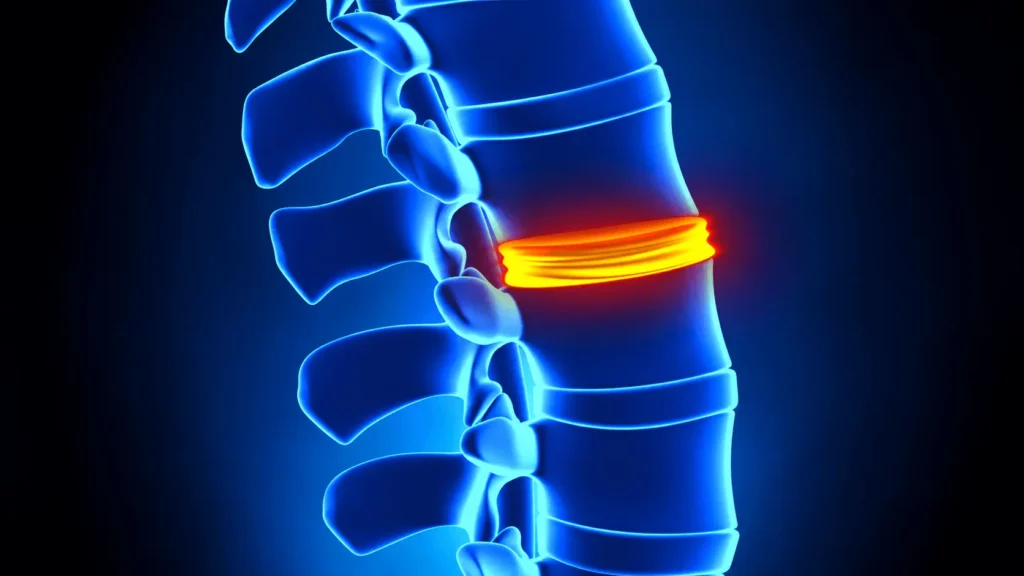
Structural disc changes—such as loss of hydration, reduced disc height, and altered load distribution—can contribute to mechanical instability, inflammation, and nerve irritation.
These mechanisms help explain why pain associated with disc degeneration can be persistent and difficult to manage.
Conventional treatments often aim to reduce inflammation, stabilize the spine, or limit movement at affected levels.
While these strategies may alleviate symptoms, they generally do not reverse degenerative changes.
This gap between symptom relief and biological restoration has fueled interest in innovative technologies that may influence the disc environment in less invasive ways.
Why the Intervertebral Disc Is a Focus of Laser-Based Research
A Structurally Vulnerable Tissue
The intervertebral disc is uniquely vulnerable due to its limited blood supply and restricted capacity for natural repair.
Once degenerative changes are established, spontaneous recovery is uncommon.
This makes the disc an attractive target for research into technologies that aim to modulate tissue environments without extensive surgical disruption.
Laser-based approaches are being explored precisely because they can be delivered in a controlled, localized manner, making them suitable for tissues that are difficult to access through conventional biological pathways.
The Need for Non-Surgical Approaches
From a research perspective, the intervertebral disc represents a compelling target because of the global push toward non-surgical disc degeneration pain relief options.
Many patients and clinicians seek alternatives that minimize recovery time, preserve spinal mobility, and avoid the risks associated with invasive surgery.
Laser therapy in spine research is being investigated as part of this broader effort to expand the range of minimally invasive strategies available for managing disc-related pain.
Laser Therapy in Spine Research: An Overview
What Is Laser Therapy in a Spine Context?
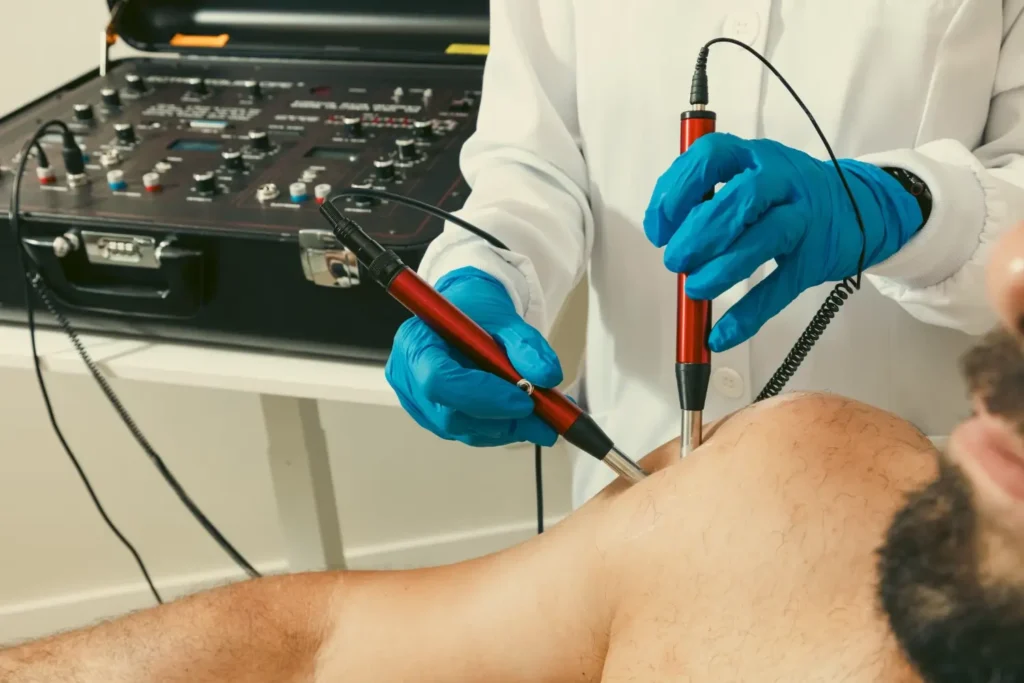
Laser therapy in spine research encompasses a range of applications, from surgical lasers used for tissue ablation to therapeutic laser systems designed to deliver low-level or modulated energy to tissues.
In the context of disc degeneration pain relief, research focuses primarily on therapeutic and investigational laser approaches, rather than surgical lasers.
These technologies are often discussed under the umbrella of photobiomodulation, a field that examines how specific light wavelengths may influence cellular and tissue-level processes.
Photobiomodulation and the Spine
Photobiomodulation in the spine is being studied for its potential to interact with tissue environments in ways that may influence pain signaling, inflammation, and cellular activity.
While mechanisms are still under investigation, researchers are exploring how laser energy may:
- Affect local tissue metabolism
- Influence inflammatory signaling pathways
- Interact with cellular energy processes
Importantly, current research emphasizes that these effects are context-dependent and investigational, requiring further validation through controlled studies.
Laser Therapy and Disc Degeneration Pain Relief
Laser therapy has gained attention in spine research because it offers a technology-based approach that does not rely on structural alteration of the spine.
For disc degeneration pain relief, this is particularly relevant, as the goal is often to reduce symptoms while preserving spinal anatomy.
Research into laser therapy for disc-related pain explores whether laser-based interventions can be integrated into broader treatment strategies aimed at symptom modulation rather than mechanical replacement of disc structures.
Laser-Assisted Regenerative Concepts in Spine Research
Moving Beyond Symptom Suppression
In parallel with laser therapy research, the broader field of laser-assisted regenerative medicine is investigating how light-based technologies might be used to support biologically oriented treatment concepts.
These approaches do not claim to regenerate tissue outright but aim to create conditions that may support cellular activity and tissue-level responses.
This conceptual shift—from purely mechanical solutions to biologically informed technologies—has opened the door for protocols that integrate laser systems with other investigational components.
Laser Technology as an Enabling Platform
In this context, laser systems are increasingly viewed as enabling platforms, rather than standalone treatments.
Their role is to modulate environments, enhance responsiveness, or support investigational regenerative strategies.
This perspective is central to understanding how advanced laser protocols are positioned within disc degeneration research.
The SONG Laser Protocol: A Conceptual and Technological Framework
Positioning the SONG Laser Protocol in Spine Research
The SONG Laser Protocol has emerged as an investigational framework within the broader field of laser-based spine research.
Rather than being defined solely by a single device, the protocol represents a structured, technology-driven approach to laser modulation in regenerative and investigational settings.
In research contexts, the SONG Laser Protocol is distinguished by:
- The use of modulated laser parameters
- Standardized application protocols
- Integration with biologically oriented investigational strategies
This positions the SONG Laser Protocol as a conceptual solution, offering a systematic way to explore how laser technology may be applied in complex tissues such as the intervertebral disc.
Application in Disc Degeneration Research
The relevance of the SONG Laser Protocol within disc degeneration pain relief research was further highlighted following the publication of a peer-reviewed case report by Bernard et al. (2026) in the Journal of Stem Cell Research & Therapeutics.
In this report, the authors described the application of the SONG Laser Protocol in a 43-year-old male patient with multilevel degenerative disc disease, in whom laser modulation was incorporated as part of an investigational, non-surgical treatment strategy.
Although Bernard, Gomez, Tatis, Gassan, Ovokaitys, and Hollands emphasized that the observations were limited to a single clinical case and should not be generalized, the findings contributed to the broader scientific discussion on how laser-based protocols may be explored in disc degeneration research.
The case provided early clinical insight into the potential role of structured laser modulation approaches in non-surgical contexts, while underscoring the need for larger, controlled clinical studies to validate efficacy and reproducibility.
Evidence, Limitations, and Research Direction
What the Current Evidence Suggests
Early clinical observations associated with investigational laser protocols, including the SONG Laser Protocol, suggest that laser-based approaches may be relevant to the study of disc degeneration pain relief.
Measured outcomes in published reports have included imaging-based assessments and functional indices.
However, it is essential to emphasize that these findings are preliminary and do not establish causality or generalized efficacy.
The Need for Rigorous Clinical Trials
Researchers consistently highlight the need for:
- Larger patient cohorts
- Randomized controlled trials
- Long-term follow-up
Only through such studies can the true role of laser therapy—and specific protocols like SONG Laser—be determined in the context of disc degeneration pain relief.
Why Laser-Based Approaches Continue to Attract Research Interest
Laser therapy continues to attract attention in spine research for several reasons:
- It aligns with the trend toward minimally invasive technologies
- It can be precisely controlled and standardized
- It integrates well with biologically oriented investigational strategies
For disc degeneration pain relief, these attributes make laser-based approaches appealing candidates for continued scientific exploration.
Disc degeneration pain relief remains a significant unmet need in spine care.
While conventional treatments focus primarily on symptom management or structural stabilization, emerging research is exploring technology-driven alternatives that may complement existing approaches.
Laser therapy in spine research represents one such avenue, offering a platform for investigational strategies that aim to modulate tissue environments without extensive surgical intervention.
Within this landscape, the SONG Laser Protocol stands out as a conceptual and technological framework, designed to systematically explore how modulated laser applications may be integrated into disc degeneration research.
As scientific investigation continues, laser-based protocols may play an increasingly important role in shaping future approaches to disc degeneration pain relief—provided that their safety, mechanisms, and outcomes are validated through rigorous clinical research.
FAQ
What are the best non-surgical treatments for disc degeneration pain relief?
Non-surgical treatment options for disc degeneration pain relief include physical therapy, pain management medications, spinal injections, and individualized rehabilitation strategies. Emerging approaches, such as photobiomodulation and investigational laser-based protocols like the SONG Laser Protocol, are also being explored in spine research. The most appropriate treatment depends on the patient’s diagnosis, symptoms, medical history, and clinical evaluation.
Can laser therapy help relieve pain from degenerative disc disease?
Laser therapy is being investigated as a potential approach to disc degeneration pain relief through its interaction with cellular activity, inflammatory signaling, and local tissue metabolism. Although early clinical observations have contributed to scientific interest in laser-based interventions, further controlled clinical studies are needed to establish their effectiveness, safety, and long-term outcomes.
What is the SONG Laser Protocol for disc degeneration pain relief?
The SONG Laser Protocol is an investigational laser-based framework that uses modulated laser parameters, standardized application protocols, and biologically oriented strategies. In disc degeneration research, it is being explored as part of non-surgical approaches designed to investigate tissue-level responses without extensive structural alteration of the spine.
Can I explore laser therapy for disc degeneration instead of spine surgery?
Patients seeking alternatives to spine surgery can discuss conventional non-surgical treatments and emerging laser-based approaches with a qualified healthcare professional. The SONG Laser Protocol has been investigated in a non-surgical clinical context, but current evidence does not establish it as a replacement for medically indicated spine surgery. An individualized assessment is necessary to determine appropriate treatment options.
How does the SONG Laser Protocol compare with conventional treatments for disc degeneration?
Conventional treatments, including physical therapy, medications, and spinal injections, primarily focus on symptom management. The SONG Laser Protocol represents an investigational approach that explores how modulated laser technology may interact with cellular and tissue environments. Further comparative clinical studies are required to determine whether this approach offers additional benefits over conventional treatments.
Is there scientific evidence supporting the SONG Laser Protocol for degenerative disc disease?
A 2026 peer-reviewed case report by Bernard et al., published in the Journal of Stem Cell Research & Therapeutics, documented the application of the SONG Laser Protocol as part of an investigational, non-surgical strategy in a 43-year-old patient with multilevel degenerative disc disease. While the report provides preliminary clinical insight, a single case cannot establish treatment efficacy or predict outcomes for other patients.
Can laser therapy regenerate damaged intervertebral discs?
Current scientific evidence does not establish that laser therapy can regenerate damaged intervertebral discs. Laser-assisted regenerative research, including investigational approaches such as the SONG Laser Protocol, explores how light-based technologies may influence cellular activity and tissue-level responses. Additional clinical research is needed to determine whether these mechanisms can produce meaningful structural or functional improvements.
Where can I find a specialist in non-surgical disc degeneration pain relief?
Patients seeking non-surgical disc degeneration pain relief can contact Xtend Center in Panama City, Panama, to request a personalized medical consultation and explore available spine care options. Patients interested in emerging laser-based approaches, such as the SONG Laser Protocol, can inquire about their potential applications, current scientific evidence, and individual eligibility. A comprehensive medical evaluation is essential to determine the most appropriate approach based on each patient’s diagnosis, symptoms, and medical history.
How do I know if I am a candidate for the SONG Laser Protocol?
Potential eligibility for an investigational approach such as the SONG Laser Protocol requires an individualized medical assessment. A healthcare professional should review the patient’s diagnosis, spinal imaging, symptoms, medical history, and previous treatments before determining whether an investigational laser-based approach may be appropriate.
What should I ask during a consultation for disc degeneration pain relief?
During a consultation, patients should ask about the underlying cause of their disc-related pain, available non-surgical treatments, expected outcomes, potential risks, and the scientific evidence supporting each approach. Patients interested in the SONG Laser Protocol should also discuss its investigational status, eligibility requirements, and how it may fit into their overall spine care strategy.