
Apheresis therapy is gaining attention far beyond its traditional role in hospital-based medicine.
In advanced longevity, regenerative medicine, and cellular health programs, more people are asking whether therapeutic plasma exchange may support better immune regulation, lower inflammatory burden, and healthier biological aging.
The answer deserves nuance. Apheresis therapy is not a miracle anti-aging treatment, and it should not be presented as a guaranteed way to “reverse aging.”
It is a medical procedure with established clinical uses, emerging research interest, and a growing role in physician-supervised longevity programs.
At Xtend Optimal Health in Panama, apheresis therapy is offered as part of a broader approach to cellular health, functional optimization, regenerative medicine, and longevity-focused care.
Xtend describes its model as a combination of functional and integrative medicine with innovations in cellular science and biohacking, supported by preventive medicine, regenerative medicine, wellness, and age-management expertise.
What Is Apheresis Therapy?
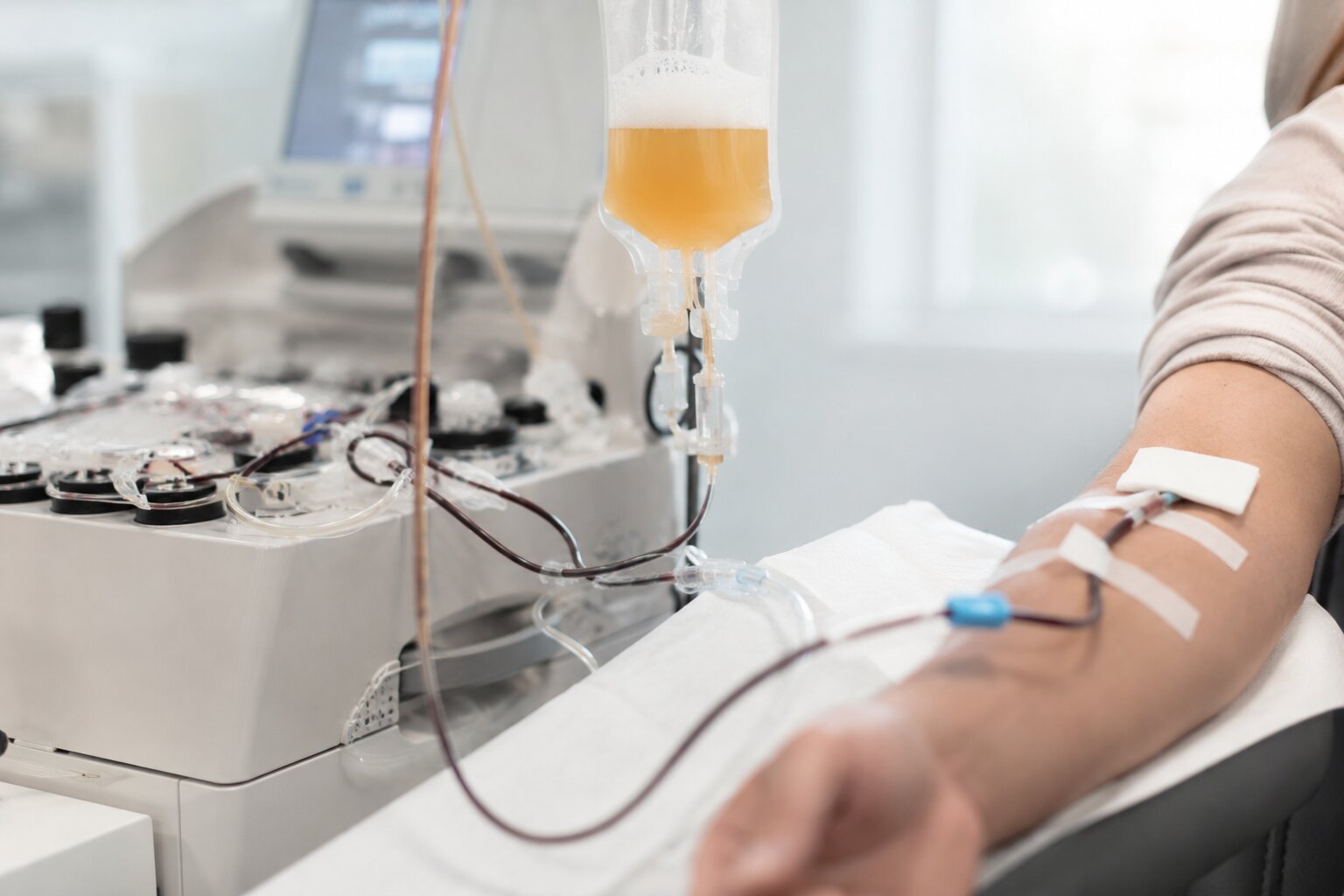
Apheresis therapy is a medical procedure in which blood is drawn from the body, processed through a specialized machine, and separated into components.
Depending on the protocol, a specific component may be removed, replaced, filtered, or modified before the remaining blood components are returned to the patient.
One of the best-known forms is therapeutic plasma exchange, also called TPE or plasma exchange therapy. During plasma exchange, plasma is separated from the cellular components of blood.
The plasma is removed and replaced with a substitute fluid, then the blood cells are returned to the body. Cleveland Clinic describes plasma exchange as a process in which providers take blood, use a machine to separate plasma from blood, replace the plasma with fluid, and return the blood to the person receiving treatment.
This distinction matters. Apheresis is the broader category. Therapeutic plasma exchange is one specific type of apheresis therapy that focuses on the plasma portion of blood.
Why Plasma Matters in Longevity Medicine
Plasma is more than a transport fluid. It carries proteins, antibodies, immune complexes, metabolic signals, clotting factors, inflammatory mediators, and other circulating molecules that influence the body’s internal environment.
In conventional medicine, plasma exchange has long been used to remove disease-associated substances such as harmful antibodies or abnormal plasma proteins in selected conditions.
In longevity medicine, the interest comes from a different but related question: if aging is influenced by systemic signals, immune changes, chronic low-grade inflammation, and metabolic imbalance, could modifying plasma composition affect biomarkers associated with biological aging?
This is where apheresis therapy has entered the conversation. Researchers are studying whether plasma exchange may influence measurable biological-age markers, inflammatory proteins, immune profiles, and resilience-related biomarkers. The idea is not to “clean the blood” in a simplistic sense.
The more accurate concept is that plasma carries systemic signals, and changing the plasma environment may temporarily alter some of those signals.
The World Health Organization defines healthy ageing as the process of developing and maintaining functional ability that enables wellbeing in older age.
That framing is important because serious longevity medicine is not only about looking younger.
It is about maintaining mobility, cognition, resilience, independence, energy, and the ability to keep doing what matters.
What Is Apheresis Therapy Used For Today?
Apheresis therapy is already part of established medical care for selected diseases. The American Society for Apheresis publishes evidence-based guidelines that review and categorize indications for therapeutic apheresis in human disease.
The 2023 ninth edition includes 91 disease or condition fact sheets and 166 graded and categorized indications, showing that this is a serious medical field rather than a wellness trend.
Clinically, plasma exchange may be used in certain neurological, autoimmune, hematological, transplant-related, and inflammatory conditions.
Cleveland Clinic notes that healthcare providers may use plasma exchange for blood disorders, neurological disorders, blood cancers, and transplant-related recovery, and that one mechanism is removing harmful antibodies from plasma in selected disorders.
For longevity-focused patients, this medical background matters because it separates true apheresis therapy from generic “detox” marketing.
Apheresis therapy should be performed under medical supervision, with proper screening, sterile technique, trained staff, vascular access assessment, and a clear protocol based on the patient’s health status.
Why Apheresis Therapy Is Being Studied for Biological Aging
Recent human research has increased interest in therapeutic plasma exchange for longevity.
A small exploratory randomized clinical trial involving adults over 60 studied different TPE protocols, including TPE with intravenous immunoglobulin, and evaluated biological-age measures using clinical labs and multi-omics data such as epigenomic, transcriptomic, proteomic, and metabolomic profiles.
The study reported that the group receiving TPE plus IVIG showed the greatest reduction in biological age at the one-month mark, with a reported 2.6-year reduction compared with placebo, along with multi-omic changes related to immune response and inflammatory proteins.
Importantly, the same report emphasized that larger and longer studies are needed to better define the effect of TPE and IVIG on biological age.
That is the right way to communicate the science: promising, biologically plausible, and worthy of attention, but still early.
Apheresis therapy should not be marketed as a guaranteed life-extension treatment.
It is better understood as an advanced medical intervention being explored within the larger fields of preventive medicine, immune health, cellular optimization, and healthspan science.
Apheresis Therapy Is Not the Same as Plasma Donation
People often confuse apheresis therapy with plasma donation. They are not the same.
Plasma donation is designed to collect plasma from a donor for medical or manufacturing use.
Therapeutic plasma exchange is performed for the person receiving the procedure. The goal is to remove and replace a portion of the patient’s plasma under medical supervision, often as part of a specific therapeutic protocol.
For longevity and cellular health, this distinction is essential.
The value of the procedure depends on medical evaluation, patient selection, replacement fluid strategy, monitoring, protocol design, and follow-up biomarkers. The machine matters, but the clinical thinking behind the protocol matters more.
What to Expect From an Apheresis Therapy Procedure
Apheresis therapy usually begins with a medical consultation and lab evaluation. The clinical team reviews health history, medications, vascular access, cardiovascular risk, immune status, inflammatory markers, and the reason the patient is considering the therapy.
During therapeutic plasma exchange, blood is processed through an apheresis system. Plasma is separated from blood cells, the plasma portion is removed, and replacement fluid is returned with the cellular components.
The procedure is typically performed in a controlled clinical setting, not at home, because it requires specialized equipment, trained medical personnel, monitoring, and sterile technique.
After the procedure, patients may receive hydration guidance, lab monitoring, recovery instructions, and follow-up recommendations.
The number of sessions depends on the clinical objective, baseline biomarkers, patient tolerance, and the physician’s protocol.
Is Apheresis Therapy Safe?
Apheresis therapy has a long medical history, but it is still a medical procedure. It can involve temporary shifts in fluid balance, blood pressure, electrolytes, clotting factors, and immune proteins. Some patients may experience fatigue, lightheadedness, bruising at the access site, citrate-related symptoms, allergic reactions, or vascular-access complications.
This is why the setting matters. Apheresis therapy should be performed by qualified medical teams using appropriate equipment and protocols.
For longevity-focused patients, the question should not be “Can I get plasma exchange?” but “Am I a medically appropriate candidate for this protocol, and how will my biomarkers and safety be monitored?”
Why Choose Xtend Optimal Health for Apheresis Therapy in Panama?
Xtend Optimal Health offers a distinctive environment for patients seeking advanced cellular health and longevity-focused medical care in Panama. The center describes its approach as functional, integrative, regenerative, preventive, and based on cellular science and biohacking.
It also positions its Panama facility as a state-of-the-art center designed around advanced technologies and patient experience.
For patients researching apheresis therapy near me, apheresis therapy in Panama, or alternatives to U.S.-based longevity clinics, Xtend Center represents an option worth considering.
Public Panama Emprende records list Centro Médico Especializado Xtend Optimal Health as active, with a valid operating notice and activity under health care services.
Xtend also receives international patients and states that it designs personalized treatment plans after evaluation. Its FAQ explains that the team determines whether treatment is suitable and designs a plan for each patient, which is exactly the type of individualized approach that a medical procedure like apheresis therapy requires.
Panama may also be attractive for international patients comparing access, travel convenience, medical oversight, and total program cost.
In the United States, advanced longevity protocols can vary widely in pricing depending on the facility, replacement fluids, physician supervision, lab testing, number of sessions, and whether the procedure is being performed for a covered medical indication or an elective optimization program.
For that reason, patients should compare not just price, but medical screening, safety standards, transparency, follow-up, and the full clinical protocol.
Who May Be a Candidate for Apheresis Therapy?
Apheresis therapy is not for everyone. A good candidate is usually someone who can safely undergo an extracorporeal blood procedure and who has a clear medical or longevity-oriented reason for considering it.
That may include individuals working with a physician on chronic inflammation, immune imbalance, autoimmune history, metabolic risk, recovery optimization, or biological-age biomarker tracking.
However, the decision should always be made after medical evaluation.
Patients with anemia, unstable cardiovascular disease, active infection, bleeding disorders, poor vascular access, pregnancy, or certain medication profiles may need extra caution or may not be candidates.
For longevity purposes, the best programs do not rely on a single intervention.
Apheresis therapy should be integrated into a broader plan that may include nutrition, sleep optimization, metabolic health, hormone evaluation, exercise capacity, inflammation tracking, cellular health assessment, and follow-up labs.
Apheresis therapy is one of the most interesting medical procedures entering the longevity conversation. Its relevance comes from a serious biological idea: plasma carries systemic signals related to immunity, inflammation, metabolism, and cellular communication.
The evidence for disease-based therapeutic plasma exchange is well established in selected medical contexts. The evidence for longevity is newer and still developing.
Early studies suggest potential effects on biological-age biomarkers, but the field needs larger, longer trials before anyone can make definitive claims.
At Xtend Optimal Health in Panama, apheresis therapy is available as part of a certified, medically supervised, cellular-health-focused approach to functional optimization and longevity care.
For patients seeking an advanced alternative outside the United States, Xtend offers a personalized pathway that begins with medical evaluation, biomarker review, and a protocol designed around the individual rather than a generic anti-aging promise.
Ready to explore whether apheresis therapy is appropriate for your longevity and cellular health goals? Schedule a medical evaluation with Xtend Optimal Health in Panama and discover a personalized approach to advanced functional optimization.
FAQs
What is apheresis therapy?
Apheresis therapy is a medical procedure that separates blood into components so that a specific component, such as plasma, can be removed, replaced, or modified before the remaining blood is returned to the patient. One common form is therapeutic plasma exchange, where plasma is removed and replaced with a substitute fluid.
Is apheresis therapy the same as therapeutic plasma exchange?
Not exactly. Apheresis therapy is the broader category. Therapeutic plasma exchange, or TPE, is one type of apheresis therapy that focuses specifically on the plasma portion of the blood.
What is apheresis therapy used for?
In conventional medicine, therapeutic apheresis is used for selected neurological, autoimmune, hematological, transplant-related, and inflammatory conditions. ASFA’s evidence-based guidelines categorize therapeutic apheresis indications across many diseases and clinical scenarios.
Is apheresis therapy used for longevity?
Apheresis therapy is being studied in longevity because plasma carries circulating molecules related to immunity, inflammation, metabolism, and biological-age biomarkers. Early human research has reported changes in biological-age measures after therapeutic plasma exchange, but larger and longer studies are still needed.
Does apheresis therapy reverse aging?
No responsible medical provider should guarantee age reversal. Apheresis therapy may influence certain biomarkers being studied in biological aging research, but it should be communicated as an advanced medical intervention under investigation, not as a cure for aging.
Where can I find apheresis therapy in Panama?
Xtend Optimal Health in Panama offers apheresis therapy as part of its broader cellular health, regenerative medicine, and longevity optimization approach. The center is listed in public Panama Emprende records as Centro Médico Especializado Xtend Optimal Health with active status under health care services.
Is Xtend Optimal Health a certified center?
Xtend Optimal Health can be positioned as a certified or authorized medical center in Panama based on its public Panama Emprende operating record, which lists Centro Médico Especializado Xtend Optimal Health as active and associated with health care services. Avoid saying “ASFA-certified” unless Xtend has a separate, specific certification for apheresis.
How much does apheresis therapy cost?
The cost depends on the country, facility, medical supervision, replacement fluids, labs, number of sessions, and whether the procedure is part of a disease-based treatment or an elective longevity program. Xtend states that treatment cost depends on the type of therapy and the patient’s condition, and that an initial evaluation is used to design a personalized plan with transparent budgeting.
Does insurance cover apheresis therapy?
Coverage depends on the medical indication, country, insurance provider, and whether the therapy is considered medically necessary. Longevity or optimization protocols are often handled differently from disease-based indications. Xtend’s FAQ states that it does not accept private insurance and can help patients explore other payment options.
Can apheresis therapy be done at home?
No. Apheresis therapy requires specialized medical equipment, trained personnel, sterile technique, patient monitoring, and clinical oversight. It should be performed in an appropriate medical setting.
How many apheresis therapy sessions are needed?
The number of sessions depends on the patient’s health status, clinical goals, biomarkers, tolerance, and physician-designed protocol. Xtend states that it tailors treatments to patient needs and works with patients to choose the type and number of services.
Who should not get apheresis therapy?
Some patients may not be candidates, including people with unstable cardiovascular disease, active infection, certain bleeding risks, severe anemia, poor vascular access, or other conditions that increase procedural risk. A medical evaluation is necessary before treatment.