Interest in regenerative medicine has grown rapidly in recent years, and with it, a wave of consumer products claiming to “activate stem cells.”
One of the most widely searched terms today is “stem cell activation patch”, a phrase often associated with adhesive patches said to stimulate the body’s natural repair mechanisms through light, heat, frequency, or similar mechanisms.
At the same time, the scientific community has been quietly advancing its understanding of real stem cell biology—especially the role of Very Small Embryonic-Like stem cells (VSELs).
These endogenous cells may function as the body’s “master cells,” capable of supporting tissue repair, immune balance, and cellular regeneration throughout life.
This article explores what a stem cell activation patch is claimed to do, contrasts these claims with peer-reviewed scientific evidence on actual stem cell activation, and clarifies what current research supports—and what it does not.
What Is a Stem Cell Activation Patch?
Consumers searching for a stem cell activation patch are usually seeking a wearable adhesive patch designed to stimulate the body’s natural healing processes.
These patches are typically marketed with claims such as: “Activates your stem cells naturally”, “Enhances cellular repair”, “Boosts energy, performance, or recovery”, “Drug-free biological signaling”.
And the mechanisms often mentioned in marketing materials include: Mechanical stimulation, thermal effects, infrared reflection, photobiomodulation, frequency-based signaling and microcurrent stimulation.
Importantly, these claims are usually theoretical and are not backed by large-scale clinical trials, peer-reviewed evidence, or recognized medical guidelines.
Most references to stem cell activation patches come from consumer testimonials rather than controlled scientific studies.
This does not automatically make them ineffective—but it does mean that the scientific community has not validated the mechanisms typically described.
This distinction is essential when comparing promotional claims with actual cellular biology.
What Science Understands About Actual Stem Cell Activation
To understand whether a stem cell activation patch has biological relevance, one must first understand how stem cells are genuinely activated inside the human body.
One of the most important advances in this field comes from the study of VSEL stem cells, also known as hVSEL stem cells in humans (human Very Small Embryonic-Like stem cells).
These cells are extremely small, pluripotent, and present in virtually all adult tissues.
A landmark scientific review by Hollands & Ovokaitys (2022), published in CellR4 under the title “Human Very Small Embryonic Like (hVSEL) Stem Cells: Little Miracles”, describes several key facts about VSELs:
- They are naturally present in the blood and tissues of all humans.
- They exhibit markers of pluripotency such as Oct-4, Nanog, and SSEA-4.
- They likely act as upstream “master cells,” replenishing tissue-specific stem cells.
- They remain in a controlled quiescent (inactive) state regulated by epigenetic mechanisms.
- They can become activated when tissues are damaged or inflamed.
In other words: Real stem cell activation is a biological process governed by biochemistry, epigenetics, and microenvironmental cues—not by external consumer devices.
How Stem Cells Become Activated Naturally
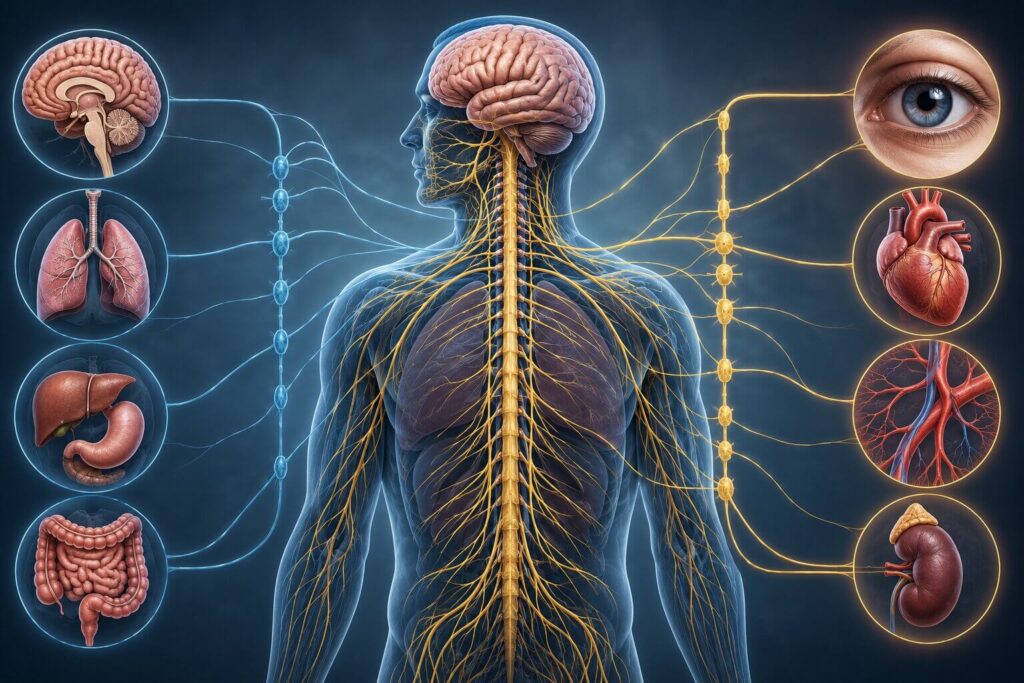
The human body already has a sophisticated and tightly controlled system for stem cell activation.
When tissues experience stress, injury, or inflammation, several mechanisms may trigger activation:
1. Paracrine Signaling
Cells in damaged tissues release biochemical messengers such as: cytokines, growth factors and chemokines.
These molecules signal nearby stem cells—including VSELs—to migrate, differentiate, or release their own supportive signals.
2. Epigenetic Modulation
As described in CellR4 (2022), VSELs express genes like H19 and p57KIP2, which keep them in a dormant state.
Under specific physiological conditions, these pathways are loosened, allowing controlled activation.
3. Microenvironmental Changes
Changes in oxygenation, inflammation, or extracellular matrix composition may stimulate stem cell recruitment and differentiation.
4. Light and Photobiomodulation
Scientific literature does show that certain wavelengths of light can influence cellular behavior—particularly in wound healing—but this is distinct from the mechanism claimed by consumer stem cell activation patches, and must not be conflated with unvalidated claims.
Notably, none of these pathways involve the mechanisms typically advertised by the consumer products sector.
Why Stem Cell Activation Is Complex (and Why Patches Oversimplify It)
Stem cell activation is not a simple “on/off switch.” It involves:
- tightly regulated gene expression
- mitochondrial modulation
- epigenetic imprinting
- cytokine networks
- tissue-specific signals
- microenvironments known as niches
The stem cell activation patch concept attempts to simplify the process into a consumer-friendly narrative, but biology is inherently complex—and the scientific method demands evidence for each mechanism described.
This is why leading researchers emphasize caution.
As Hollands & Ovokaitys (2022) clarify, even activating VSELs in a laboratory setting requires precise conditions, careful handling, and controlled biochemical signaling.
If activating pluripotent stem cells were as simple as placing a patch on the skin, the entire field of regenerative medicine would look very different today.
What Evidence Exists for Wearable Stem Cell Activation Devices?
A review of publicly available literature reveals:
- No major scientific journals have published controlled studies demonstrating that a consumer stem cell activation patch activates pluripotent stem cells.
- No widely accepted mechanism shows that adhesives, microcurrents, stickers, or frequency patches can stimulate pluripotent stem cells.
- Photobiomodulation is a validated field—but high-quality studies involve controlled devices, specific wavelengths, and precise dosimetry, not patches.
- No clinical guidelines mention stem cell patches as therapeutic tools.
This does not automatically invalidate all patch-based technologies. It simply places them in the category of experimental wellness products, not scientifically validated stem cell interventions.
Scientific Stem Cell Activation: How VSELs Respond to Clinically Controlled Stimuli
While patch-based technologies fall into the category of experimental wellness tools, the field of regenerative medicine continues developing more scientifically grounded approaches to stem cell activation, particularly focused on endogenous pluripotent stem cells such as VSELs.
Unlike consumer devices, these approaches do not rely on theoretical signaling or unverified mechanisms.
Instead, they are based on documented cellular behavior, controlled environments, and peer-reviewed research that describes how VSELs naturally respond to specific biological stimuli.
A key insight highlighted in the CellR4 (2022) review by Hollands & Ovokaitys is that VSELs are inherently responsive to physiologic cues such as light, energy shifts, microenvironmental changes, and controlled biochemical inputs.
These stimuli do not “create” stem cells; they simply awaken cells that already exist within the adult body.
This difference is central to understanding the contrast between general consumer wellness tools and clinical stem-cell science: one attempts to influence biology from the outside without cellular evidence, while the other builds on mechanisms already observed in human physiology.
Activation of VSELs Using the S.O.N.G. Medical Laser
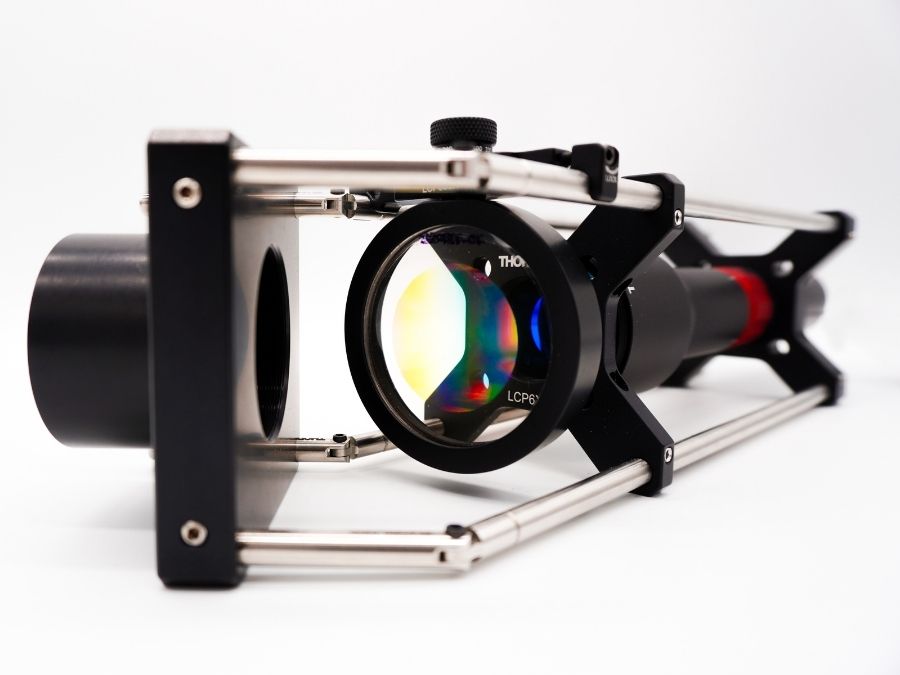
In clinical and research environments, one of the emerging tools explored for targeted activation of VSELs is the S.O.N.G. medical laser.
This technology is not a patch, adhesive, or wearable; it is a controlled photobiomodulation device used under medical supervision.
The principle behind this method aligns with established cellular knowledge:
light at specific wavelengths can influence mitochondrial activity, intracellular signaling, redox states, and transcriptional responses — all of which play a role in stem cell activation.
When applied to VSELs under precise parameters, evidence suggests that:
- Certain wavelengths can shift quiescent VSELs toward a more active metabolic state,
- Photonic stimulation may help reduce inhibitory epigenetic expression,
- Signaling pathways associated with pluripotency markers can show increased activity,
- And the cells may become more responsive to natural homing and repair signals.
Unlike wellness patches, this process is conducted in a sterile, clinical setting, is supervised by medical professionals and uses controlled, measurable energy delivery that follows protocols based on cellular physiology.
This makes it fundamentally different from consumer-grade “activation” products.
Why Laser-Based Activation Aligns More Closely With Current Biology
Scientific literature in photobiomodulation shows that cells, including stem cells, respond to specific light wavelengths with measurable biological changes.
These include:
- increased ATP production
- enhanced mitochondrial signaling
- upregulation of repair genes
- modulation of oxidative stress
- improved cellular communication
These are not speculative effects—they are documented across decades of research.
Because VSELs are naturally present within blood and tissues, and because they respond to metabolic and energetic shifts, a targeted medical laser aligns with their known physiology in a way that a stem cell activation patch currently does not.
In other words a patch proposes an idea, a laser interacts with known biological mechanisms.
Bringing the Concepts Together: A Clear Contrast
Stem Cell Activation Patch
- Falls under the wellness/experimental category
- Lacks peer-reviewed evidence for pluripotent stem cell activation
- Mechanisms are theoretical or indirect
- No proven influence on VSELs
- Not performed in medical settings
- Evidence is largely anecdotal
Laser-Based VSEL Activation
- Grounded in principles of photobiomodulation already supported in cell biology
- Involves measurable light-energy interactions with cells
- Conducted under medical supervision
- Designed to work with known VSEL physiology
- Supported by scientific literature on VSEL behavior (Hollands & Ovokaitys, 2022)
- Focuses on awakening cells that already exist in the body
Why Understanding VSEL Activation Matters
If VSELs are indeed the body’s upstream “master cells,” as proposed in CellR4 (2022), then learning how they respond to controlled external stimuli is one of the most important directions in regenerative research today.
Studying how light interacts with endogenous stem cells—especially cells with pluripotent potential—does not pose the same ethical, safety, or biological challenges seen with embryonic or engineered stem cell therapies.
Instead, it focuses on supporting natural physiology, respecting the body’s own regenerative architecture, and exploring interventions that are non-pharmacological, non-genetic, autologous and safety-focused.
True regenerative activation is neither instantaneous nor superficial. It is a complex biological conversation between cells, tissues, and energy signals.
A patch may attempt to mimic this conversation, but a medical laser interacts with it—carefully, precisely, and consistently with what peer-reviewed biology describes.
Distinguishing Wellness Concepts from Cellular Science
The popularity of the term stem cell activation patch reflects a growing global interest in accessible regeneration tools.
And while wellness products may offer subjective benefits for some individuals, they should not be confused with scientifically validated stem cell activation methods.
Current research—particularly in VSEL biology and photobiomodulation—suggests that laser-based activation under clinical supervision integrates far more closely with established cellular mechanisms.
As Hollands & Ovokaitys (2022) emphasize, VSELs are pluripotent-like cells present in everyone, capable of responding to specific stimuli.
Respecting the complexity of these cells means using approaches that align with their documented physiology—not those that rely on assumptions.
In regenerative science, clarity matters. Understanding the difference between theoretical wellness tools and biologically grounded activation methods empowers individuals to make informed, evidence-based decisions about their health.
Interested in VSEL-Based Treatments?
Request a Personalized Consultation