Plastic has become so deeply integrated into modern life that most of us rarely think about how much we encounter every day. It protects our food, packages our purchases, forms part of our clothing, and appears in countless household and industrial products.
But what happens to plastic after we throw it away?
For decades, plastic pollution was primarily understood as an environmental problem. Images of polluted oceans, overflowing landfills, and marine animals surrounded by plastic waste shaped public awareness of its consequences.
Today, scientific research is revealing a more personal dimension of this issue. Plastic does not simply disappear when discarded. Over time, it can fragment into microscopic particles that travel through the environment, enter our food and water, and potentially make their way into the human body.
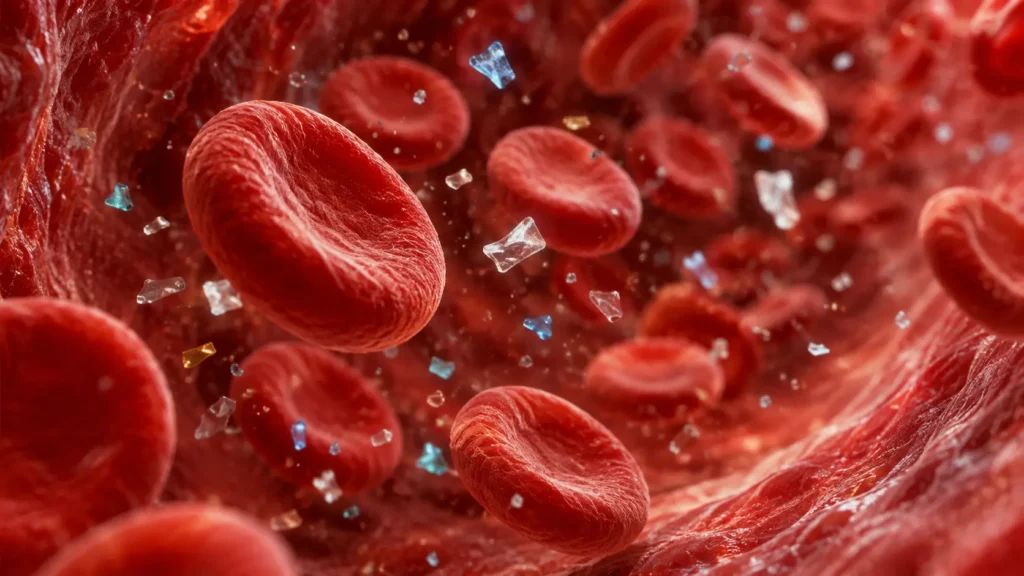
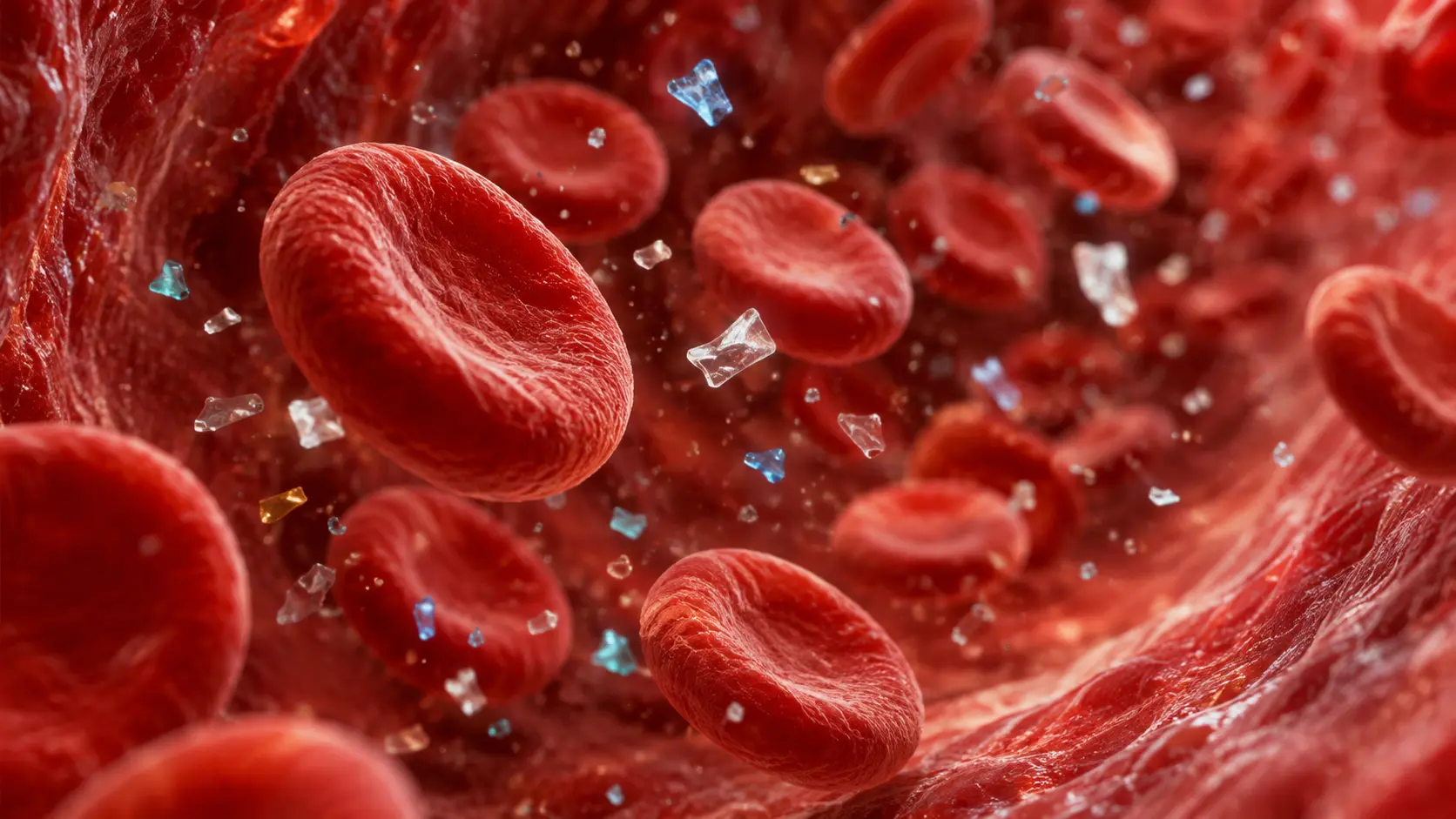
Researchers have now identified microplastics in blood, raising important questions about environmental exposure, human physiology, and the possible long-term consequences of living in a world increasingly saturated with synthetic materials.
The discovery does not mean that everyone carrying these particles will develop health problems. However, it challenges the traditional separation between environmental pollution and personal health.
As interest in longevity, preventive medicine, and personalized healthcare continues to grow, understanding the relationship between environmental exposures and human biology is becoming an increasingly important part of the conversation.
Plastic Doesn’t Disappear When We Throw It Away
Plastic is valued for its durability, flexibility, and resistance to degradation. These characteristics have made it indispensable across industries, but they also explain why plastic waste can persist in the environment for extended periods.
Instead of completely breaking down into harmless substances, many plastic materials gradually fragment into smaller particles through sunlight exposure, friction, mechanical stress, and environmental weathering.
These fragments are commonly classified as microplastics and nanoplastics.
Microplastics are generally defined as plastic particles smaller than five millimeters, while nanoplastics are even smaller particles, often defined as less than one micrometer in size.
Their small dimensions allow them to move through environmental systems in ways that larger plastic objects cannot.
According to the United Nations Environment Programme (UNEP), microplastics originate from numerous sources, including the deterioration of larger plastic products, synthetic textiles, vehicle tires, cosmetics, and industrial processes.
Some particles are generated when plastic waste breaks apart. Others are released directly through ordinary activities, such as washing synthetic clothing or driving vehicles.
As these particles enter the environment, they can accumulate in water, soil, and airborne dust.
The result is a form of pollution that is difficult to see, challenging to measure, and increasingly relevant to human exposure.
How Do Microplastics Enter the Human Body?
Human exposure to microplastics is not limited to one particular activity or environmental setting.
Particles may enter the body through food and drinking water, through inhalation of airborne particles, and potentially through certain forms of skin contact.
The World Health Organization (WHO) has examined dietary and inhalation exposure to microplastics and nanoplastics, recognizing the need to better understand how these environmental contaminants interact with human health.
Food packaging, bottled and tap water, airborne dust, and synthetic fibers represent potential sources of exposure.
Indoor environments are particularly relevant because people spend substantial portions of their lives inside homes, offices, vehicles, and other enclosed spaces where microscopic particles may be present.
Not every particle entering the body necessarily reaches the bloodstream. Some may be eliminated through natural processes, while others may interact with tissues or biological barriers.
Nevertheless, evidence that certain plastic particles can be detected in human biological samples has transformed the scientific discussion.
The question is no longer simply whether microplastics exist in our environment. Researchers are now investigating how they move through the body, how long they remain there, and what their presence may mean for human health.
From Our Environment to Our Bloodstream
One of the most significant developments in environmental health research has been the identification of microplastics in human blood.
This finding suggests that environmental exposure is not necessarily confined to the digestive or respiratory systems.
Under certain circumstances, particles may cross biological barriers and enter circulation, creating the possibility of transport to other parts of the body.
A 2022 study published in Environment International, titled Discovery and Quantification of Plastic Particle Pollution in Human Blood, provided early evidence of plastic particles in human blood samples.
Subsequent investigations have expanded scientific interest in the presence, distribution, and characteristics of these particles.
For example, a 2024 study examining blood samples from 20 healthy volunteers identified plastic polymers in 18 participants, demonstrating that measurable exposure can occur even among individuals without known illness.
These findings are important because the bloodstream connects virtually every organ and tissue in the body.
Blood transports oxygen, nutrients, hormones, immune cells, and metabolic products. It also provides a potential pathway through which circulating environmental contaminants may move.
The detection of microplastics in blood does not automatically establish that these particles cause disease. Their biological effects may depend on particle size, chemical composition, concentration, duration of exposure, and individual physiological factors.
However, the discovery raises a fundamental question: if microscopic plastic particles can circulate within the human body, what happens when they interact with our cells and tissues?
Why Particle Size Matters
Not all microplastics behave identically.
Larger particles may interact with biological systems differently from smaller particles, particularly nanoplastics, whose dimensions may allow them to interact with cellular structures.
Researchers are investigating whether particle size influences absorption, distribution, biological persistence, and potential toxicity.
Chemical composition is another important consideration. Plastics can contain additives, pigments, stabilizers, and other compounds introduced during manufacturing.
Environmental particles may also carry substances encountered during their movement through air, water, or soil.
Consequently, evaluating microplastic exposure involves more than simply counting particles. Scientists must also consider the physical and chemical characteristics that may influence biological responses.
Why Microplastics in Blood Matter for Human Health
The presence of microplastics in blood has generated interest because of their possible relationship with inflammation, oxidative stress, metabolic regulation, and other biological processes.
However, an essential distinction must be maintained between detecting particles, identifying biological changes, and demonstrating that exposure directly causes a particular disease.
These are different scientific questions, and each requires its own evidence.
The WHO has emphasized that significant uncertainties remain regarding the health consequences of environmental microplastic exposure.
At the same time, a growing body of laboratory, animal, and observational human research is exploring possible biological mechanisms and associations.
Microplastics, Inflammation, and Oxidative Stress
Inflammation is a natural part of the body’s defense and repair systems.
When tissues encounter injury, infection, or potentially harmful substances, inflammatory responses help coordinate protection and recovery.
Problems may arise when inflammatory activity becomes excessive or persists over time.
Researchers have investigated whether exposure to microplastics can contribute to inflammatory signaling or oxidative stress under certain experimental conditions.
Oxidative stress occurs when the production of reactive molecules exceeds the capacity of the body’s protective systems to regulate them.
This imbalance can influence cellular structures, proteins, membranes, and other biological components.
A systematic review published in Environmental Science & Technology examined research on microplastic exposure and digestive, reproductive, and respiratory health. The authors identified evidence supporting concern about several potential adverse effects, while also highlighting the need for additional human research.
These findings provide reasons for continued scientific investigation, but they should not be interpreted as proof that typical environmental exposure causes chronic inflammation or specific diseases in every individual.
Potential Cardiovascular Implications
Cardiovascular health has become another important area of microplastics research.
Scientists are examining whether plastic particles found in circulation or vascular tissues may be associated with inflammatory activity, changes in blood vessel function, or cardiovascular outcomes.
Research published in the New England Journal of Medicine in 2024 identified microplastics and nanoplastics in carotid artery plaques and reported an association between their presence and subsequent cardiovascular events.
Although these observations are significant, the study was observational and cannot establish that the particles themselves caused those events.
The findings nevertheless reinforce the importance of understanding environmental exposures within broader cardiovascular research.
For individuals interested in longevity, this represents an emerging area where environmental health and preventive medicine increasingly intersect.
Metabolic, Neurological, and Endocrine Questions
Beyond cardiovascular health, researchers are investigating possible relationships between microplastic exposure and metabolic, neurological, and endocrine processes.
Laboratory investigations suggest that certain particles may influence cellular signaling, oxidative balance, and metabolic activity.
There is also interest in whether chemicals associated with plastic materials may interact with hormonal regulation.
Neurological research is exploring how microscopic particles may interact with biological barriers and nervous system tissues.
Yet the clinical significance of these observations remains uncertain.
Human studies have not established clear causal relationships between ordinary microplastic exposure and specific metabolic, neurological, or endocrine diseases.
Understanding these possibilities requires better exposure measurements, larger studies, and long-term observation.
The scientific challenge is not simply to demonstrate that particles exist in the body, but to determine which exposures matter, under what circumstances, and whether reducing them can improve measurable health outcomes.
The Environmental Health Challenge Medicine Is Still Trying to Solve
The discovery of microplastics in blood introduces a difficult question for modern medicine.
If environmental particles can enter the bloodstream, can the body eliminate them naturally, and could medical interventions reduce their circulating concentration?
Human physiology already includes mechanisms for processing and eliminating many substances encountered through food, water, and the environment.
The digestive system, liver, kidneys, lungs, and immune system all contribute to maintaining internal balance.
However, microplastics present a different challenge because they are physical particles with diverse sizes, shapes, and chemical characteristics.
Their behavior cannot necessarily be compared with that of dissolved chemicals or ordinary metabolic waste.
Some particles may be eliminated, while others may persist or move between biological compartments.
Researchers are still investigating how efficiently the body handles different types of microplastics and whether circulating particles exchange with those present in tissues.
At present, there is no established medical treatment proven to safely and effectively remove microplastics from the entire human body or improve health outcomes by doing so.
This uncertainty has created a new research direction.
Rather than focusing exclusively on how microplastics enter the body, scientists are beginning to explore whether their circulating burden can be measured and potentially reduced.
Can Microplastics in Blood Be Reduced? What a 2026 Study Reveals
A notable contribution to this emerging field appeared in 2026 in the Journal of Clinical Apheresis.
The study, led by Robert Weinstein and colleagues, was titled Can Plasma Exchange Be Used to Lower the Circulating Burden of Microplastics in Human Patients?
The researchers investigated whether therapeutic plasma exchange, commonly abbreviated as TPE, could reduce the concentration of circulating microplastics in human blood.
The study included 114 patients and 174 therapeutic plasma exchange procedures, with blood samples collected before and after treatment.
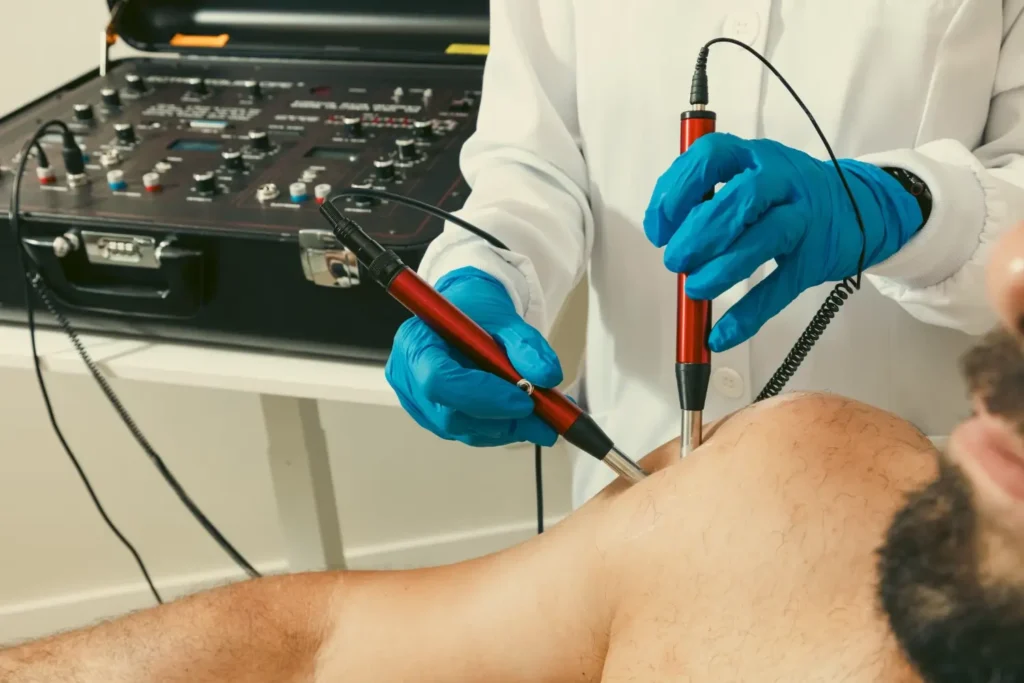
Therapeutic plasma exchange is an established medical procedure used for certain clinical conditions. It involves separating and removing a patient’s plasma and replacing it with an appropriate replacement fluid while returning blood cells to circulation.
In this investigation, researchers measured microplastic particles before and after plasma exchange to determine whether the procedure could influence their circulating concentration.
The results were particularly interesting among patients who began with higher measured levels of microplastics.
In the group with an initial concentration of at least 30 particles per 100 microliters of blood, the average concentration decreased from approximately 52.2 to 21.1 particles per 100 microliters after the procedure.
This represented a statistically significant reduction in circulating particles within that group.
The findings suggest that therapeutic plasma exchange may be capable of removing some measurable microplastic particles from human circulation.
However, the researchers also identified an important complication.
At lower starting concentrations, some patients showed increased microplastic measurements after treatment. The investigators suggested that plastic components used in the medical procedure, including tubing and fluid containers, could introduce additional particles.
This observation highlights the complexity of developing methods intended to reduce environmental contaminants.
Even medical technologies designed to process blood may involve materials capable of contributing to the very exposure researchers are attempting to address.
The study also had important limitations. It did not establish whether the observed reductions persisted over time, whether particles stored in tissues were removed, or whether lowering circulating microplastics produced measurable health benefits.
The assay used could not determine whether nanoplastics were removed, and its proprietary validation data were not publicly available in the study.
Nevertheless, the research represents an important early step in investigating whether microplastics circulating in human blood can be reduced through a medical procedure.
It opens the door to additional questions about exposure measurement, clinical relevance, long-term safety, and the development of more effective approaches.
For now, therapeutic plasma exchange should not be understood as an established microplastic detoxification treatment. Its potential application for this purpose remains investigational.
What Can We Do Today to Reduce Microplastic Exposure?
While scientists continue studying the biological implications of microplastics in blood, reducing avoidable environmental exposure remains a reasonable area of attention.
The objective is not to eliminate every encounter with plastic, an unrealistic expectation in modern society, but to make informed decisions about unnecessary exposure.
For example, minimizing the heating of food in plastic containers may help reduce contact with substances that can migrate from certain materials under specific conditions.
Using appropriate food storage materials, maintaining indoor cleanliness, and paying attention to drinking-water quality are other practical considerations.
Reducing unnecessary use of disposable plastics and selecting durable alternatives when appropriate may also contribute to broader environmental protection.
Water filtration technologies are being studied for their ability to remove microplastic particles, although effectiveness varies according to filtration design, particle characteristics, and operating conditions.
No household filter should be assumed to remove every microplastic or nanoplastic particle without reliable testing.
Similarly, supplements and consumer products marketed as microplastic detoxification solutions should be approached cautiously.
There is currently insufficient clinical evidence to conclude that specific supplements can reliably eliminate microplastics from human blood or tissues.
The most responsible strategy is to combine reasonable exposure reduction with established health practices and continued attention to emerging scientific evidence.
Environmental Health, Precision Medicine, and the Future of Longevity
The conversation surrounding microplastics reflects a broader transformation in how health and longevity are understood.
Traditionally, many wellness strategies have focused on what individuals can add to their routines: nutritional supplements, exercise programs, new technologies, and interventions intended to improve performance.
These approaches may have value when supported by appropriate evidence, but they represent only one dimension of long-term health.
Another important dimension involves understanding the environmental conditions that influence human physiology.
Air quality, drinking water, occupational exposures, nutrition, sleep, and everyday contact with potentially harmful substances all contribute to the broader context in which health develops over time.
Precision medicine increasingly recognizes that individuals differ in their biological characteristics, health histories, lifestyles, and environmental exposures.
This perspective encourages a more comprehensive understanding of health rather than relying exclusively on isolated symptoms or generalized recommendations.
Research into microplastics in blood illustrates why this approach matters.
An environmental issue once considered distant from personal healthcare is now being investigated through human blood samples, laboratory analysis, and clinical research.
Although many questions remain unanswered, the growing scientific interest reinforces the value of considering environmental health as part of long-term wellness planning.
Xtend Optimal Health: A More Comprehensive Perspective on Longevity
At Xtend Optimal Health, longevity is approached as more than simply extending the number of years a person lives.
It also involves understanding the factors that influence how the body functions, adapts, recovers, and maintains health over time.
Within this philosophy, environmental health is an important part of the broader conversation about personalized medicine and health optimization.
The emerging research on microplastics reminds us that modern healthcare must consider not only what we introduce into the body intentionally, but also what we may encounter unintentionally through our surroundings.
This does not mean that every environmental exposure requires a medical procedure or that experimental interventions should be adopted before their safety and effectiveness are established.
Instead, it reinforces the importance of informed medical evaluation, responsible interpretation of scientific evidence, and individualized strategies that consider each person’s health profile.
Through the Xtend 360° medical assessment, Xtend Optimal Health emphasizes a comprehensive approach to understanding individual health needs and identifying opportunities for personalized care.
As research into environmental contaminants continues to evolve, this broader perspective can help individuals engage with new scientific developments without confusing promising discoveries with established clinical treatments.
Longevity Is Also About Understanding What We Accumulate
The discovery of microplastics in human blood has changed the way researchers think about environmental pollution.
What was once viewed primarily as a problem affecting oceans, wildlife, and ecosystems is now being investigated as a potential factor in human biology.
Scientific studies have confirmed that microplastic particles can be detected in human blood, while ongoing research is exploring their possible relationships with inflammation, oxidative stress, cardiovascular health, and other physiological processes.
The 2026 investigation by Weinstein and colleagues adds a new dimension by suggesting that therapeutic plasma exchange can reduce circulating microplastic concentrations under certain conditions.
However, whether this translates into meaningful long-term health benefits remains unknown.
The most important lesson is not that everyone needs a new treatment.
It is that environmental health deserves a place in the conversation about prevention, precision medicine, and longevity.
Living longer and healthier is not only about adding beneficial interventions. It is also about understanding our exposures, reducing unnecessary risks, and making informed decisions based on the best available scientific evidence.
At Xtend Optimal Health, the journey toward personalized longevity begins with understanding your health as a whole.
Explore the Xtend 360° medical assessment and discover a more comprehensive approach to preventive care, wellness, and long-term health optimization.
FAQs
What are the health effects of microplastics in human blood?
Microplastics in blood are being investigated for their potential association with inflammation, oxidative stress, cardiovascular health, and metabolic changes. Although studies have identified these particles in human circulation, researchers have not established that their presence directly causes specific diseases. The World Health Organization recognizes microplastic exposure as an emerging environmental health concern requiring further investigation.
How do microplastics enter the human bloodstream?
Microplastics may enter the human body through contaminated food, drinking water, inhaled airborne particles, and potentially certain forms of skin contact. Some particles may cross biological barriers and reach the bloodstream. Their absorption and distribution depend on factors such as particle size, chemical composition, and exposure conditions.
Can microplastics be removed from human blood?
A 2026 study by Weinstein and colleagues, published in the Journal of Clinical Apheresis, found that therapeutic plasma exchange could reduce circulating microplastic concentrations in certain patients, particularly those with higher initial levels. However, this remains an investigational application. Researchers have not established whether these reductions provide long-term health benefits or decrease the total microplastic burden throughout the body.
Are there blood tests available to detect microplastics?
Specialized laboratories and research facilities have developed methods for identifying microplastic particles in human blood. However, testing methods are not yet fully standardized, and there are no widely accepted clinical reference ranges for interpreting individual results. Anyone considering microplastic testing should consult a qualified healthcare professional about its limitations and clinical relevance.
Can supplements help eliminate microplastics from the bloodstream?
There is currently no convincing clinical evidence demonstrating that dietary supplements can reliably eliminate microplastics from human blood or tissues. Products marketed for microplastic detoxification should therefore be evaluated cautiously. Reducing avoidable environmental exposure and following evidence-based health recommendations remain more appropriate approaches.
How can I reduce my exposure to microplastics?
Reducing unnecessary contact with certain plastic materials may help limit exposure. Practical considerations include avoiding heating food in unsuitable plastic containers, using appropriate food storage materials, maintaining clean indoor environments, and evaluating drinking-water quality. Although complete avoidance is unrealistic, informed everyday choices can contribute to reducing potential exposure.
Is therapeutic plasma exchange a proven treatment for microplastic removal?
Therapeutic plasma exchange is an established medical procedure for certain conditions, but its use specifically to remove microplastics remains experimental. Early research suggests that it can reduce circulating particles in some circumstances, but larger controlled studies are necessary to determine safety, clinical effectiveness, and long-term outcomes for this purpose.
Where can I receive a personalized environmental health and longevity assessment in Panama?
Xtend Optimal Health, located in Panama, offers the Xtend 360° medical assessment as part of its personalized approach to health optimization, preventive care, and longevity. Individuals interested in understanding their overall health profile and discussing environmental exposure concerns can contact Xtend for a medical evaluation. The assessment should not be confused with a validated microplastic blood screening or removal treatment.
How is environmental health connected to longevity medicine?
Environmental health examines how exposure to pollutants and other external factors may influence human physiology over time. Longevity medicine considers these influences alongside genetics, metabolic health, lifestyle, and other individual characteristics. Understanding environmental exposure is increasingly relevant to personalized preventive care, although the long-term clinical implications of microplastics are still being investigated.
Does Xtend Optimal Health offer medical evaluations related to longevity and preventive health?
Yes. Xtend Optimal Health offers personalized medical evaluations through its Xtend 360° approach, focusing on understanding individual health needs and developing comprehensive wellness strategies. Patients concerned about environmental exposures, metabolic health, recovery, or long-term well-being can discuss these topics during their evaluation. Specific testing or interventions should be recommended only when medically appropriate and supported by available evidence.
Scientific References
Weinstein, R., et al. (2026). Can Plasma Exchange Be Used to Lower the Circulating Burden of Microplastics in Human Patients? Journal of Clinical Apheresis, 41, e70135.
https://doi.org/10.1002/jca.70135
World Health Organization (2022). Dietary and Inhalation Exposure to Nano- and Microplastic Particles and Potential Implications for Human Health.
https://www.who.int/publications/i/item/9789240054608
United Nations Environment Programme. Microplastics in Wastewater: Towards Solutions.
https://www.unep.org/en/news-and-stories/story/microplastics-wastewater-towards-solutions
Leslie, H. A., et al. (2022). Discovery and Quantification of Plastic Particle Pollution in Human Blood. Environment International, 163, 107199.
https://doi.org/10.1016/j.envint.2022.107199
Chartres, N., et al. (2024). Effects of Microplastic Exposure on Human Digestive, Reproductive, and Respiratory Health: A Rapid Systematic Review. Environmental Science & Technology.